Hyphal modification in fungi.

Hyphal modification in fungi
Types of Hyphal modification in fungi

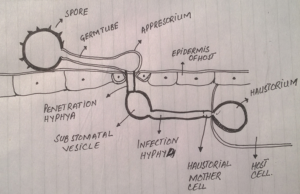
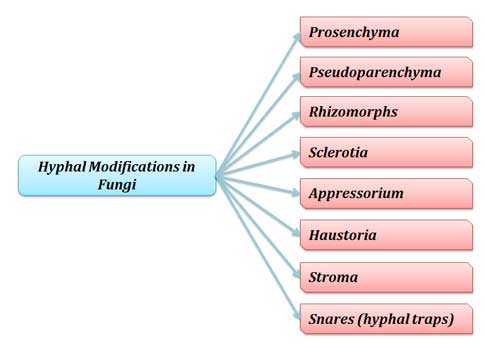
(1)Plectonchyma. A false tissue is formed by aggregation of hyphae. (A)Prisonchyma. It is loosely worn tissue of hyphae. They do not loose their identity. (B) Psedo phyrenchyma. Hyphae become woven and inter wind into a compact mass. They loose their identity. (2)Rhizomorphs. A thick strand or root like aggregation is called Rhizo morph. In rhizo morph hyphae loose their identity and whole mass behaves as organized unit. In Rhizo morph have higher injection capacity e.g armellarelia , melea. (3)Sclerotium. It is formed by aggretion and adhesion of hypae.Survive for longer period ( many year ) so these are called resting stage of fungi.Under favourable condition they are germinate and produce hypae and reproductive structure or spore. e.g clavicep purpure a Rhizocina solanine. Macroaphomina phenolics. (4)Stroma Any fungal tissue that forms reproductive structures is called stomata.Compact structures like matter. Generally sclerotia on germination form stroma. (5) Appresorium. These are common present in parasitic fungi ectoparasites. “An appresorium is simple terminal lobbed like structure of germinate is called appresorium”. It is adheres to surface of host and help to penetrate hyphae of pathogen into host tissues.e.g order erysiphales. (6) Haustorum. These are produced intra cellular mostly but usually intercellular . They secrete certain enzyme and hydrolyzes protein sccto and absorb nutrients from host with out. Houstonia also provide greater surface area for exchange of material.

.
Meristematic tissue and type of Meristematic tisse.

Meristematic tissue
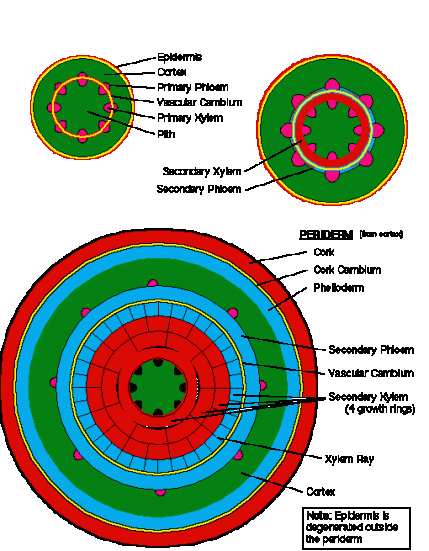
Structure of vascular cambium and cark cambium

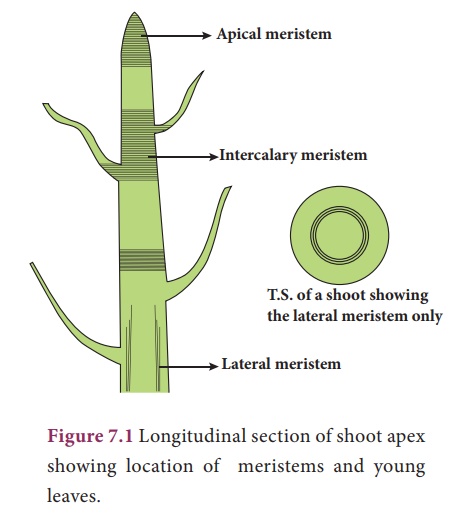
Meristematic Tissue. As all the plants exhibit intermediate growth where the plant will continue to add new organs as root,stem or leaves. “Plants are able to grow due to some specialized tissue which is known ase meristematic tissue”. “The region where the cell divide again and again,the growth occur so it is called meristem”. All these cell quickly differentiate than change into permanent tissue as vascular tissue, dermanent tissue as vascular tissue,dermal tissue and so on. Type of meri stem. 1-Apical meri stem. 2-Lateral meri stem. 3-Intercalary meri stem. (1) Apical meri stem. Function is to extend plant growth. Apical meri stem are of two types according to locality. a)Root apical meri stem. b)Shoot apical meri stem. “The meristem which increase the length of plants is called apical meristem”It is tip of root and shoot. (2) Lateral meri stem. Lateral meristem represent the stem.It folicate the thick ness. “The meristem which increase the diameter width of plant is called lateral meri stem. (3) Intercalary meri stem. The locality region is leaf blade base. It is also called basal meristem.It is only present in monocot like repeated grassing. It is poesent in lief blade which extend the length of leaf. Meristem always folicate to primary and secondary organ. 1) Primary growth. The growth in which length of plant increase is called primary growth. 2)Secondary growth. “The growth in which width of plant increase is called secondary growth”It make plants wider. There are two type of lateral meristem which control secondary growth. 1-Vascular Cambium. 2-Cark Cambium. (1) Vascular Cambium. It increase the dimeter of root and stem It is also form wood tissue. e.g pine in gymno sperms . It cause the formation of xylem and phloem.It form secondary phloem out side the body of plants. (2) Cork Cambium. It cause the formation of bork when width of stem increase another type of meri stem replace epidermis and cortex .After their replacement special type of meristem arise is called cork cambium .The cell of inner region from secondary cortex.

12 RabiUlAwal 2021 Eid MiladUnNabi.          

Eid Miladunnabi is on 19 oct 2021 on thosday.Eid Miladunnabi is known as the birthday of the islamic last prophet hazrat  Muhammad (صلی اللہ علیہ وسلم)۔Eid Miladunnabi observes every year in the all warld in the islamic date of RabiaulUwal 12.MialdunNabi is also called Miladunnabvi in Arabic warld 12 rabiulawal 2021 date in the Arabic ward is 19 oct 2021 on tuesday .In Pakistan-India-Bangladesh and some other part of warld on 19 oct 2021.          Eid Miladunnabi or 12 Rabiulawal 2021is celebrated on the 12 day of the Rabiulawal which holds significant importance in Islam and the muslim ummah.On this day with the birth day of their prophet hazrat Muhammad (صلی اللہ علیہ وسلم) special prayers are offered mosque,where religious scholar speech about last prophet hazrat Muhammad (صلی اللہ علیہ وسلم) teachings of serving,mankind peaceful,mankind , honest,forgiveness, practice in which leads become a better person.

Types of chlamydomonas.

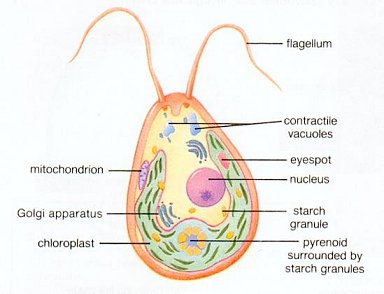
Occurance. 150 species. Mostly uni cellular valvocals. Mostly presen in unicellular form very distributed algae. Present in pond,pools,riches,lakes, moist socks. It color is turbid green. Saline water. C ehrenberg. some species are present in sea water and some species are present in fresh water. Hymetochron color is red pigment. Structure. Simple cell structure 0.02mm size. There are four form of chlamydomonas. 1- spherical. 2- pyri form. 3- ellibsadle. 4- cylendricals. Eye spot. Eye spot covered by minute lense. Eye spot sensitive to light movement control. 2-eye spots are number c-plostigma are eye spot starch granules. Reserve product are starch. Pyrenaid reserved product cloroplast cup shape. Cytoplasm………….nucleus. 1-Cell wall. 2-Flagella. 3-Contractile vacoules . 4-Eyespot.

Structure of Chlamydomonas

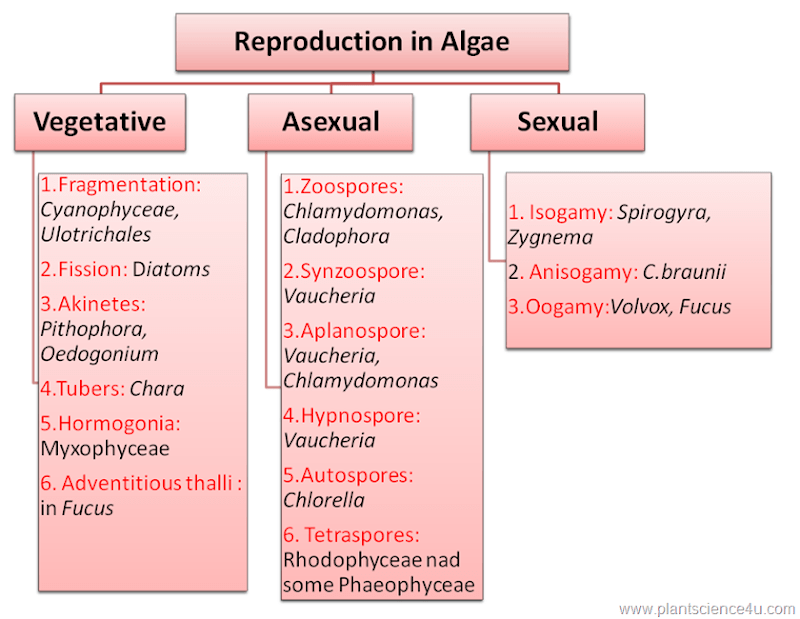
Reprodection in Algae.

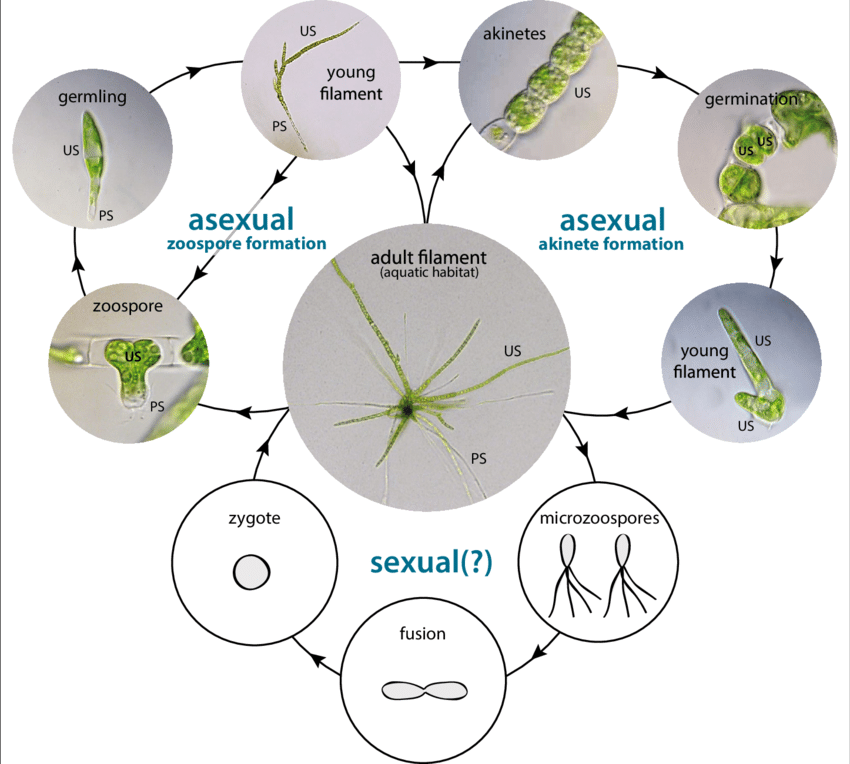
There are two type of reprodection. 1- Sexual Reproduction. 2- Sexual Reproduction. 1- A Sexual Reproduction. There are three type of a sexual reproduction. (A)zoospores. (B) Aplano spores (C) alma Stage. (A) Zoospores. Favour able , motile spore , Development star , First flagella disappear than division process start , than nucleus and protoplasm are divide than a spore are produced. Meiosis division start. Further 2 to 4 spore divided. Than division start 4 to 8 , 8 to 16 , 16 to 32 , 32 to 64 at maturity stage. Cell wall secreted. Flagella appear and cell cycle completed. (B) Aplano Stage. Unfavourable condition, Non motile, Nucleus and protoplasm divide must present in aplano spores. 2-16 spore produced. Thick wall structure, it convert into aplano spores. hypno spores are thick wall rounded shaped. Protoplasm divide 2-16 spore. Aplano spore to hypno spore to flagella. (C) palma Stage. Dry condition,moisture present.Doughter cell divided,paren cell. At the end musilage break. Than grow process start and flagella arise. 2-Sexual reproduction. There are three type of sexual reproduction. A) Iso gamy. B) Anisogamy. C) oogamy. (A)Iso gamy. Gametes that same size and structure. Male gametes+Female gametes. Sperm+egg. Fertilization. (zygotes.). (B)Anisogammy. Gametes have similar shape but different Size. Male gametes,small but active and female gametes large but inactive. (C)Oogamy. Gametes have different size and shape. Micro gametes have male gametes , small gametes,active gametes is called antheridia. Macro gametes have large gametes,less active archigonia. Antheridium and egg are fused further diploid zygote produces.

Types of mycelium.

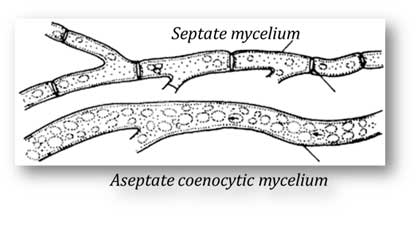
1-A Septate Mycelium.                                  Usually in algal fungi(phycomycetes).         No internal partition.                                        This mycelium is called multi nucleated mycelium.            Coenocytic Solid plate to cut off.They reprodective structure .   2- Septate Mycelium. Develope internal cross wall is present is called septate Mycelium. Divide haphae into segments. Appear at regular inter walls. The segments may be unicellular or multi cellular. The septa mean provide mechanical support to hyphae.Complete portion do not occur. Hyphal modification. Plectonchyma. A false tissue is formed by aggregation of hypae. (A)person chyma. It is a loosely worn tissue of hyphae. They do not loose their identity. (B) psedo phyrenchyma. Hyphae become woven and inter wind into a compact mass. They lose their identity.

Mycelium.

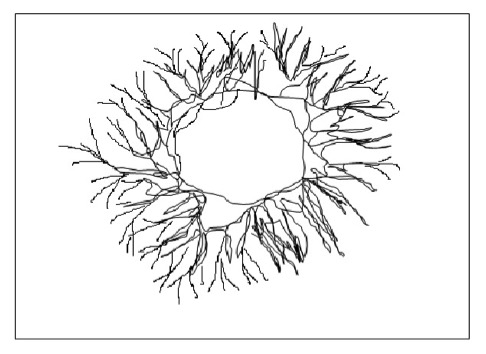
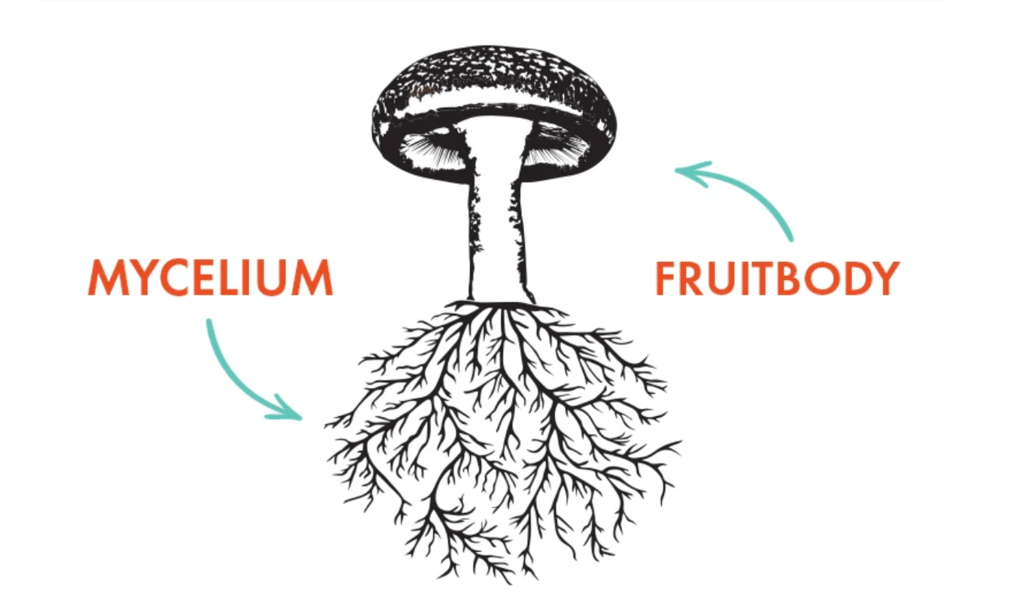
Mycelium is a vegetative part of fungi which consist of branching and thread like hyphae.                                                                      Hyphae is a structural unit of mycelium.                                                         Mycelium is a procuring structure of fungi.                                                                          The medium upon which mycelium grows.                                                                    Mycelium absorption the food digestion of food , digestion of food , excretion , respiration , and growth.                               In mycelium hyphae spread in all direction.                                                             Hyphae usually colorless particularly embedded in sub stratum. In aerial hyphae in some fungi become colored black,orange,yellow,blue,brown and red. Color is confined with Hyphal wall. Pigments are present in protoplasm and they don not form integral part of living matter. They play no of role in physiology of fungi. Apical. The growth in length take place at the tips of hypae is called apical.

Mycelium structure
Mycelium structure in mushroom.

Types of leaf.

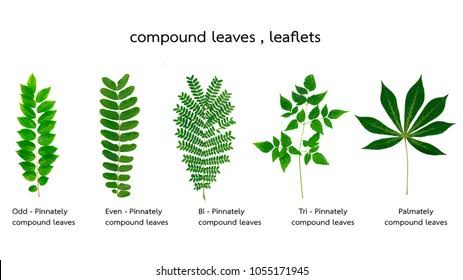
Types of leaf. (1)Simple leaf. 1-No incision or pinch. 2-No cut lamina lotta. 3-If incision is present then it can not touch the mid ribs. e.g ficus plant , mango, radish etc. (2) Compound leaf. 1- Incision present with section. 2-lamina in cut , pinching point , incision present cut in lamina.Incision reach cut to mid ribs. 3-Further more lamina divide into leaf lets. Types of compound leaf. (A) pinnately compound leaf. If leaf origin from common axis. e.g neem plants. Types of Pinnately compound leaf. (1)Uni pinnate. Origin from two side. (a) paripinnate. If leaf arrangement in even or pair,then this leaf is called paripinnate. e.g neem plants. (b) Imparipinnate. If leaf arrangement in addition this leaf is called imparipinnate.lamina divide into single leaf lets e.g Rose plant. (2)Bi pinnate. Lamina divide into two type of leaf lets. e.g acacia. (3) Tri pinnate. Lamina structure divide into three type of leaflet e.g mimosa,morning a. (4) Di pinnate. Lamina divide into three or more than three type of leaf lets e g corriener,carrot. (2) palmately compound. Leaf origin from common point.Different arrangement of leaf. (1) unifoli cate. If leaflets of lamina is single division than it is called unifolicate . e.g citrus plant. (2) Bi Folicate. If lamina divide into two leaflets. e.g bohuna. (3) tri Folicate. If lamina divide into three leaflets. e.g lamina. (4) Tetra Folicate. If lamina divide in four leaflets. e g macila plant. (5) Multi Folicate. If lamina divide in more than four leaflets than it is called multi Folicate. e.g silk cotton.

Simple leaf and compound leaf.

Pinnately leaves and types of pinnately leaves.

Thallus.

1-Unicellular Thallus. In some of lower fungi such as chytrides. The thallus is more or less spherical and singel called structure. At the time of reprodection the single cell become reprodection unit. Such fungi is called holo artic fungi. Whole thallus of fungus become converted into a reprodective cell. In the vegetative and reprodective stages don not occur to gather in some time. 2-Filamentous Thallus. Mejourity fungi have filamentous thallus. Filament originates through the germination of spore. Spore germinates when it lands on substratum and other conditions are favour able. In some spore produced only short tubular structure of limit grow. And in most fungi,spore give rise to a fluffy cottony mas. These ong fine filaments are known as hyphae.Haphae is a greek word,haphae mean web.

Thallus

Types of protoplasm.

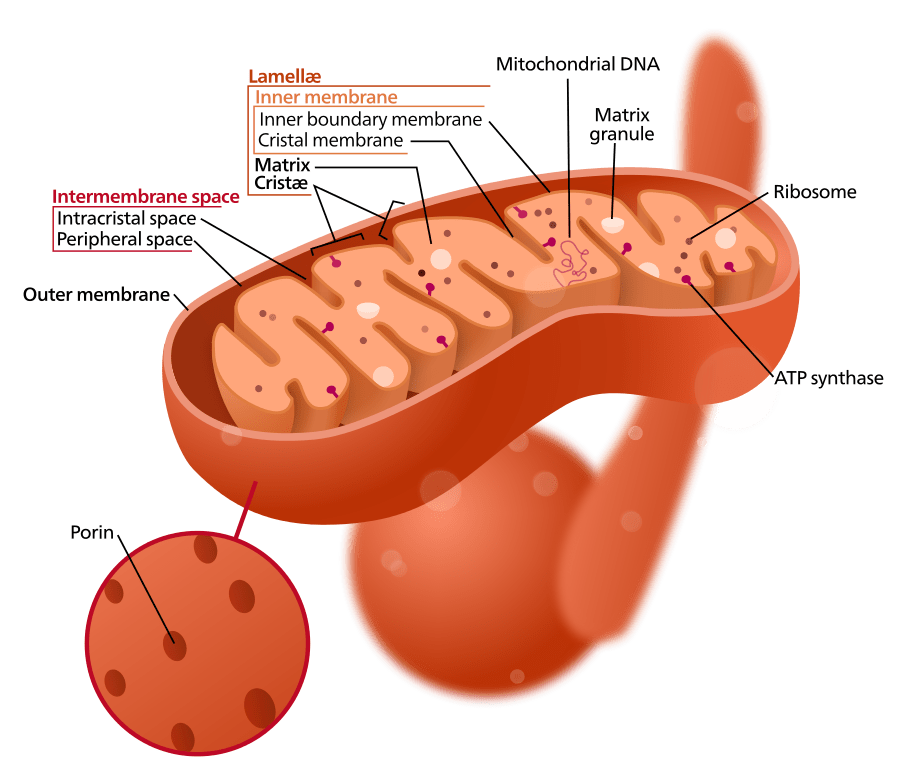
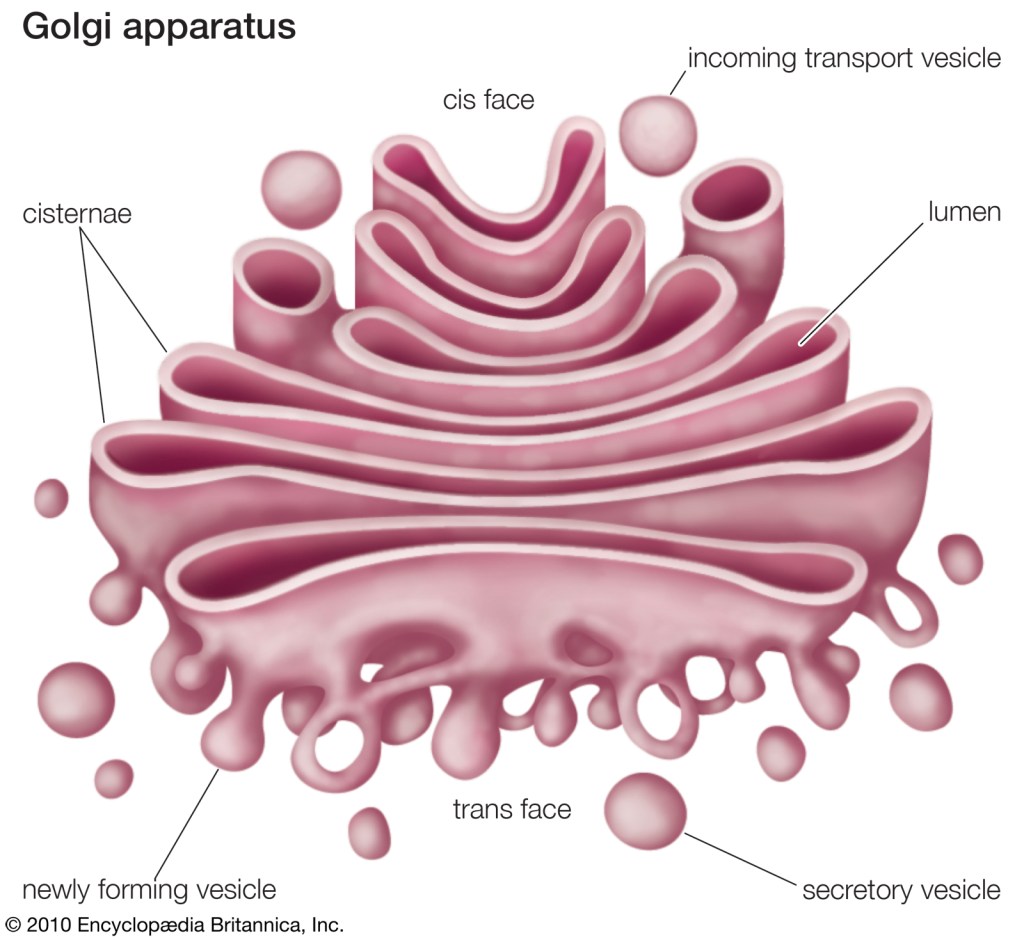
Types of protoplasm. (1)Mitochondria. *They contain small usually known as mitochondria. *Each is envelop by double membrane. *Inner membrane is infolded to form cristae. *Cristae contains the fluid that fills the space between membrane. *Cristae increase the surface area of inner membrane. *High surface area allows an increased capacity for ATP generation. * The mitochondria are the power house of the cells. *No fundamental different between mitochondria of fungi and green plant. *Hawker in 1965 Cristae of fungi are fever of the green plant,flatter of the green plant and irregular of the green plant. (2)Golgi Apparatus. With exception of Oomycets is less chance of occurrence of structure like golgi apparatus. (3)Vacuole. Cytoplasm of young hyphae,hyphal tip lack appear latter in old cells. With age,these vacuole enlarge and show a tendency to join to gather and ultimately reduce the cytoplasm in thin layer with cell wall. (4) Inclusions. Various kind—————store food *lipids,glycogen,oil drop,carbohydrate,proteinous material volution. *No starch grain. *Pigment but no chlorophyll. *It is a Carotenoids. *Scarefes several kinds of ferments,enzyme and organic acid. (5) Nucleous. Nucleus Is one ,two or more globose/ ellipsoid. It size is 2 or 3 meroun. It cannot seen with out special technique. Structurally nucleolus consist of central dense body,Chromatin strand and whole structure is surrounded a nuclear membrane.

1-Mitochondria
2 Gali apparatus